
 By
By 
By Grizzly Trailer Sales | Trailer Buying Guides | Serving Rupert & Montpelier, ID
If you’ve been shopping for a work trailer in southern Idaho, chances are you’ve landed on two main options: dump trailers and deckover trailers. Both are hardworking, versatile rigs. But they’re built for different jobs, and picking the wrong one can cost you real time and money. At Grizzly Trailer Sales, we talk to farmers, ranchers, and landowners every week who come in knowing they need a trailer but aren’t sure which direction to go. This guide lays out the honest comparison.
What a Dump Trailer Actually Does Well
A dump trailer is exactly what it sounds like. The bed lifts hydraulically and material slides out the rear. For anyone hauling loose stuff regularly, that’s a genuine time-saver. No shoveling, no raking, no wrestling with a tarp and pitchfork at the end of a long day.
The loads dump trailers handle best include:
• Topsoil, gravel, and road base for driveway repairs or landscaping
• Manure and bedding from livestock operations
• Brush, tree trimmings, and organic debris
• Demolition debris from construction or outbuilding teardowns
• Sand, mulch, and bulk garden amendments
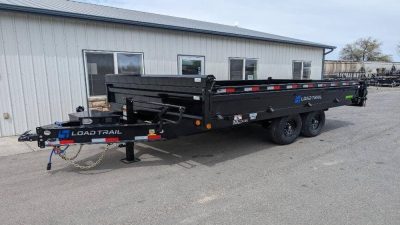
For property owners with acreage who are constantly moving material from one spot to another, a dump trailer eliminates a lot of manual labor. A typical two-axle dump trailer in the 10,000 to 14,000 lb GVWR range can haul several tons per load and dump it in under a minute.
The trade-off is that dump trailers generally have taller sidewalls and a fixed floor. You can’t drive equipment onto them easily, and loading anything with wheels or tracks requires a dedicated loading dock or ramp situation that the trailer itself doesn’t provide.
Where Deckover Trailers Have the Edge
A deckover trailer sits the deck above the wheel wells rather than between them. That design creates a flat, unobstructed platform that’s wider and more accessible than a standard bumper-pull flatbed. The open deck means you can load from the sides, the rear, or drive equipment straight on when paired with the right ramps.
Deckover trailers shine when you’re moving equipment. A skid steer, a tractor attachment, a compact excavator, a riding mower, an ATV. Anything that rolls or tracks onto a platform without needing to be shoveled or dumped. The low-profile deck also makes loading heavier equipment less precarious than climbing a steep ramp onto a tall trailer.
For contractors, ag operations, and rural property owners who need to move equipment between fields, job sites, or storage locations, a deckover is the cleaner solution. The wider usable deck width, often 102 inches, also means you can haul side-by-side UTVs, wide implements, or multiple smaller items at once.
The obvious limitation is that a deckover can’t self-unload. If you’re hauling bulk material, you’re unloading it the same way you’d unload a flatbed.
The Questions That Actually Settle It
Most buyers who come into Grizzly Trailer Sales thinking they need one or the other end up clarifying their answer when they walk through a few specific questions.
What are you hauling most often?
If the majority of your loads are loose material, dirt, debris, or anything you’d shovel, go with a dump trailer. If you’re moving equipment, machinery, or anything that drives or rolls on under its own power or with a loader, a deckover is the stronger fit.
How often do you need the trailer?
Daily-use trailers deserve more thought around loading and unloading speed. A dump trailer saves significant time on bulk material runs. But if you’re moving a tractor or skid steer a few times a week, the ability to drive on and secure quickly matters more than hydraulic dumping.
What’s your tow vehicle situation?
Deckover trailers in larger sizes often require a gooseneck or fifth wheel setup. Bumper-pull deckovers exist, but larger ones demand a capable truck and hitch rating to match. Dump trailers are commonly available in bumper-pull configurations and can be paired with a wider range of tow vehicles. Know your tow rating before you decide on size.
Is this one trailer doing multiple jobs?
Some buyers want a single trailer that handles both bulk loads and equipment moves. A tilt-deck trailer can bridge part of that gap for equipment hauling, and some dump trailers accept side boards or ramps as accessories. Realistically, though, a dump trailer optimized for gravel and a deckover optimized for a skid steer are different tools. If you find yourself saying you need both, that’s a fair answer.
New vs. Used: What to Know Before You Buy
Both trailer types are available new and used at Grizzly Trailer Sales. For dump trailers, pay close attention to the hydraulic cylinder condition, the integrity of the dump bed pivot points, and the floor thickness. A used dump trailer that’s been hauling abrasive material for years may have floor wear that’s expensive to address.
On used deckovers, inspect the deck boards or steel decking for warping, rot if it’s wood, and check that any ramps included are square and close cleanly. Weld quality at high-stress points around the neck and axle mounts tells you a lot about how the trailer was built and how it’s been used.
New trailers from manufacturers like Teton Trailer, Snake River, and Dutton come with warranty coverage and current safety ratings. For either type, know the GVWR and compare it to your actual payload needs with a margin to spare.
Find the Right Fit at Grizzly Trailer Sales
The team at Grizzly Trailer Sales carries both dump trailers and deckover trailers at locations in Rupert and Montpelier, Idaho. We stock new and used inventory from regional manufacturers and can walk you through the differences in person, no pressure, just practical advice based on what you’re actually hauling.
If you’re still on the fence, come out and look at both side by side. Seeing the bed height, the ramp angle, the sidewall depth, and the deck width in real life tends to answer the question faster than any comparison guide can. Give us a call at our Rupert office at 208-678-2981, stop by either location, or browse current inventory online to see what’s in stock.








Comments