
 By
By 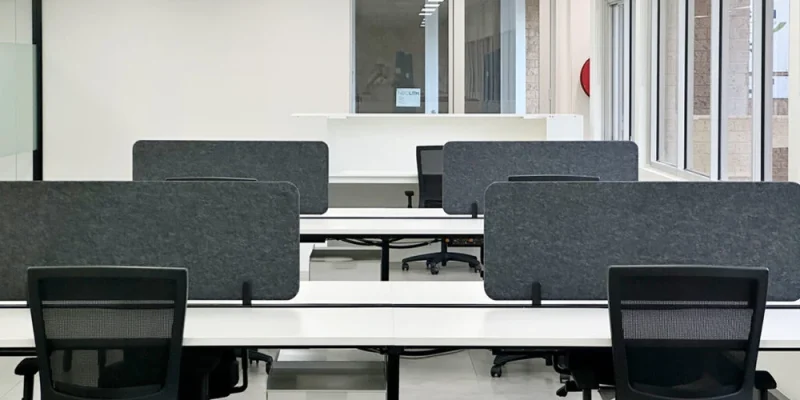
Rip a wall out in a freestanding warehouse and nobody downstairs notices the noise. Do the same thing on level four of an occupied office building and the tenant next door is on the phone to building management within the hour.
That difference is most of what makes an office strip out harder than it looks from the outside. The demolition itself, pulling out partitions and ceiling tiles and old cabling, isn’t the complicated part. Doing it a few metres from people still working is.
Sealing the space off comes first
Before anything gets touched, the surrounding area gets protected. Plastic sheeting and dust barriers go up around common areas, lifts, and adjacent tenancies, and the floors get taped and covered too. None of that adds much time to the job, but skipping it is how a two day strip out turns into a dispute with the tenancy next door over dust in their carpet.
A quick check for hazardous materials happens around the same point, before any wall comes down rather than after.
What actually comes out
Partitions and internal walls go first, usually followed by ceiling tiles, old lighting, and whatever cabling or tenant-installed services were added over the years the office was occupied. Joinery and fixed furniture come out too, along with flooring where the lease or the next fitout calls for it.
Sometimes that’s the whole job. Office partition removal on its own is common enough that it’s treated as its own smaller task rather than folded into a full strip out every time.
Working around a building that’s still running
Timing gets built around whoever else is in the building, not just around the crew’s own schedule. That sometimes means after-hours or weekend work when the space sits inside an active commercial building, so trading hours and lift access for other tenants stay untouched.
Strip It Out coordinates that side of things directly with property managers rather than leaving a tenant to manage lifts, noise windows, and access approvals on their own. An office strip out handled that way tends to finish without anyone else in the building noticing it happened at all, which is really the whole point.
Retail shops, professional suites, and hospitality tenancies all run into the same logistics, whether the building’s a standalone office or a floor inside a larger tower. The strip out itself rarely takes long. Working around everyone else in the building is usually what decides how the job actually goes.
A written scope avoids most of the arguments
A site assessment happens before any quote gets locked in, and that’s where the scope actually gets confirmed rather than assumed. Hazardous materials get flagged at this stage too, well before demolition starts, since finding them mid-job tends to stop everything until they’re dealt with properly.
Once the scope’s confirmed, the quote comes back fixed rather than open-ended, and that fixed scope is what stops a straightforward job turning into a running conversation about extras. It also gives whoever’s managing the building something concrete to check the finished work against, rather than relying on a verbal description of what was agreed.
Waste handling sits at the end of the same process. Everything pulled out during the strip out gets loaded into skip bins and disposed of properly rather than left for someone else to deal with, and the final clean covers sweeping and vacuuming the space before it’s handed back. A trade-ready shell means exactly that, ready for the next contractor to walk in and start, not a space that still needs another round of cleanup first.







Comments